
All projects
Mission
In February 2026, the Shanghai Science & Technology Museum reopened to the public after more than two years of closed-door renovation. This marks the first major upgrade since the museum’s inauguration in 2001. The renewed museum now features ten exhibition halls. VAVESTUDIO has worked closely with the museum and its transformation team from the very beginning, contributing deeply to the conceptual design of the space and exhibits for the gallery of "Gleam of Exploration".
A New Role for Science Museums
When translating the history of science and technology into spatial experiences, we began by reflecting on two core questions: How do humans disseminate new knowledge and inventions? How do humans understand and navigate their relationship with knowledge?
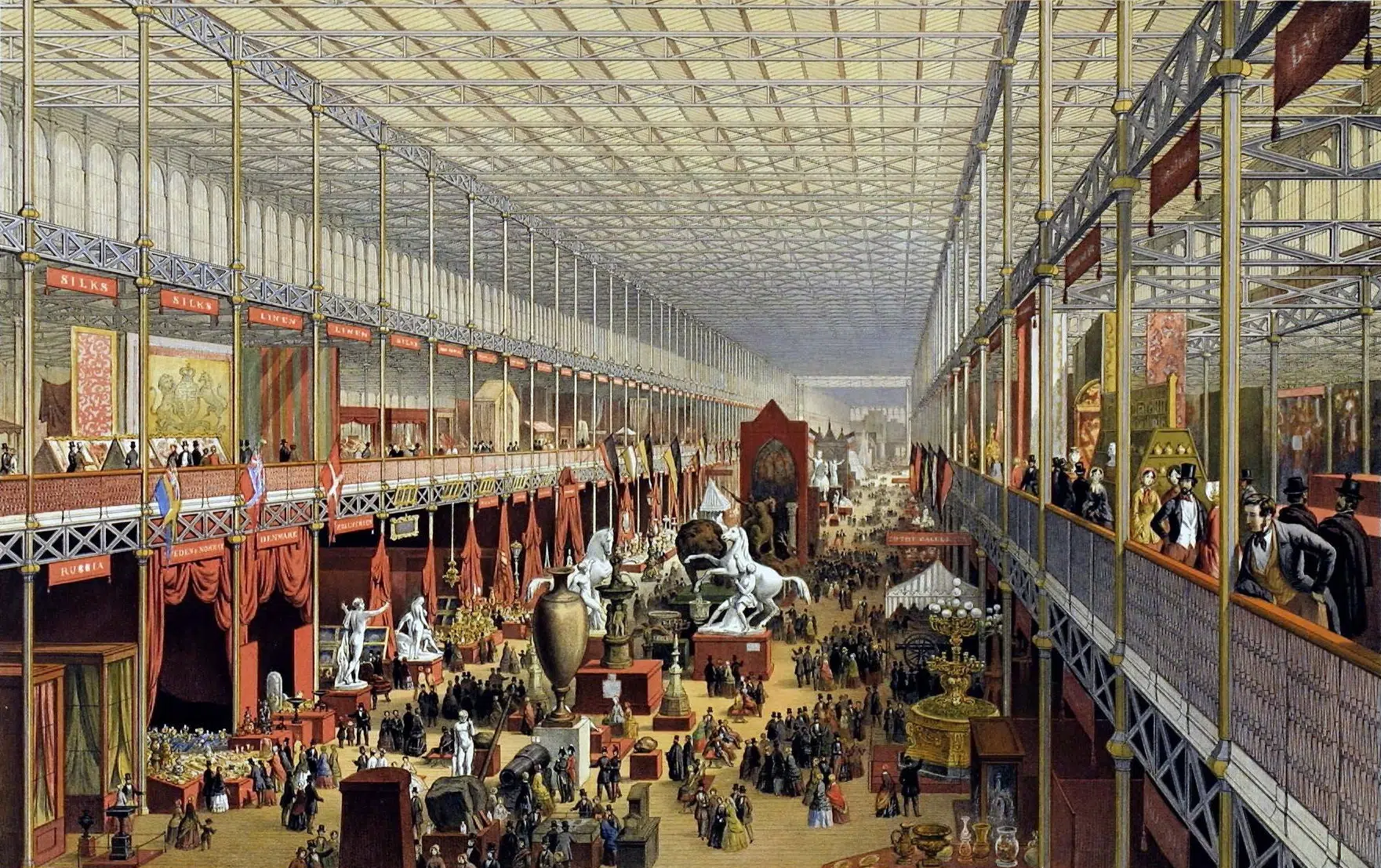
The Great Exhibition at Crystal Palace, London, 1851 ©McNeven, J., coloured lithograph, Victoria and Albert Museum
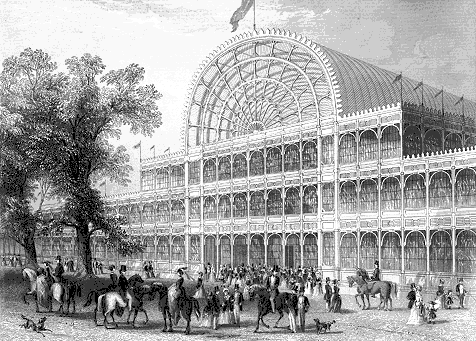
Crystal Palace, London, 1851 ©wikiarquitectura.com
Following the Industrial Revolution in the 19th century, science and technology advanced rapidly, and the science museum emerged. Early science museums adopted an encyclopedic approach, displaying steam engines, textile machines, and other inventions in a celebratory manner. In the 20th century, a wave of reflection led to a shift, from mere collection display to the representation of scientific concepts themselves, alongside a growing focus on public science education. By the 1960s, a third generation of science museums, exemplified by the Exploratorium in San Francisco, began emphasizing experiential content and sparking curiosity through highly interactive, hands-on exhibits. [1]

Deutsches Museum, Munich, 1925 ©Das Deutsches Museum: 100 Jahre im Fluss, Wolfgang M. Heckl (Hrsg.)

Exploratorium, San Francisco, 1969 ©Mingpao
Over the course of nearly 200 years, science museums have used exhibits and displays to fulfill their mission of communicating humanity’s latest inventions and discoveries to the public. But in today’s age of information overload, a new challenge has emerged: if knowledge is now accessible at our fingertips, what is the core value of a science museum if it merely aims to "impart knowledge"?
As we enter the fourth generation, science museums are expanding their boundaries, integrating scientific developments with broader social contexts to tell more complete and compelling stories about the history of science. Their goal is to present the milestones of scientific progress in a way that sparks curiosity, fosters a sense of social responsibility, and cultivates scientific literacy. Visitors are no longer passive recipients of knowledge; they actively engage, ask questions, and challenge scientific ideas, embodying the spirit of dialogue, inquiry, and skepticism that drives real scientific research.
As stated by Hu, Haijie, co-founder of VAVE: "A science museum never aims to replace the classroom. Its role is to ignite that small spark of curiosity. I hope that when people leave, they carry with them an unanswered question."

Exploring the Path of Genes, Shanghai S&T Museum
Gleam of Exploration: Using Light as a Narrative Tool
In the late 1990s, scholar J. J. Wellington categorized science museum exhibits into two types: didactic and experiential.[2] The former focuses on conveying specific knowledge, while the latter emphasizes emotional and intellectual engagement through experience. Unfortunately, subsequent scholarship has largely focused on expanding these categories, paying little attention to the spatial design of science museums, focusing on isolated exhibits rather than the spatial container that holds them.
From the outset of the spatial concept phase, the design of the "Gleam of Exploration" placed narrative at its core. Here, the space itself becomes a medium for understanding knowledge, not a rigid container for a collection of disciplinary facts. This also reflects our understanding of the human–knowledge relationship in the age of AI. In this context, sparking curiosity and a desire to explore through immersive experiences matters far more than memorizing established facts. The gallery’s forward-looking approach lies not only in its exhibits but also in its capacity to inspire deep reflection on the questions that shape our future.

The Starlight River, Shanghai S&T Museum
Light is one of humanity’s oldest metaphors. Groundbreaking discoveries are often described as a flash of light, a moment of enlightenment. As a result, light serves as both a unifying narrative thread and a spatial design language in the concept design for "Gleam of Exploration". Like a flowing river, light connects three thematic zones: "The Starlight River," where the human spirit of scientific discovery shines; "Exploring the Path of Material Structure," where the elusive rules of the quantum world come alive; and "Exploring the Path of Genes," where the rhythm of life itself pulses. Each flash of light illuminates the people and stories behind scientific progress, inviting visitors to connect on an emotional level.

Spatial Analysis Diagram, Gleam of Exploration, Shanghai S&T Museum ©VAVESTUDIO
Chapter 1: The Starlight River
The path of science has never been straightforward. Behind the discoveries that changed history lie countless nights of solitude, doubt, and perseverance, a journey of explorers pushing forward in the dark, sharing their findings with the world.
"The Starlight River" draws on cinematic and theatrical techniques, using immersive multimedia to draw visitors into a complete narrative environment. A sweeping light installation flows across the ceiling like a river of scientific discovery, telling the stories of pioneering scientists throughout history. Each beam of light represents a scientist. Visitors can explore their lives and relive the moments that shaped history.
Here, visitors leave behind distractions and enter a space for quiet listening and exploration.


Chapter 2: Exploring the Path of Material Structure
If you could see an electron, what color would it be? The quantum world is abstract, distant, and elusive. It surrounds us, yet no one can truly "see" it.

"Exploring the Path of Material Structure" uses flowing streams of particle-like light to evoke the fluid, dynamic nature of the quantum realm, a space filled with the uncertainty of what exists between presence and absence. In the distance, a suspended model of a quantum computer looms, with streams of data-like light cascading down around it, creating a visual anchor that is both striking and quietly captivating.
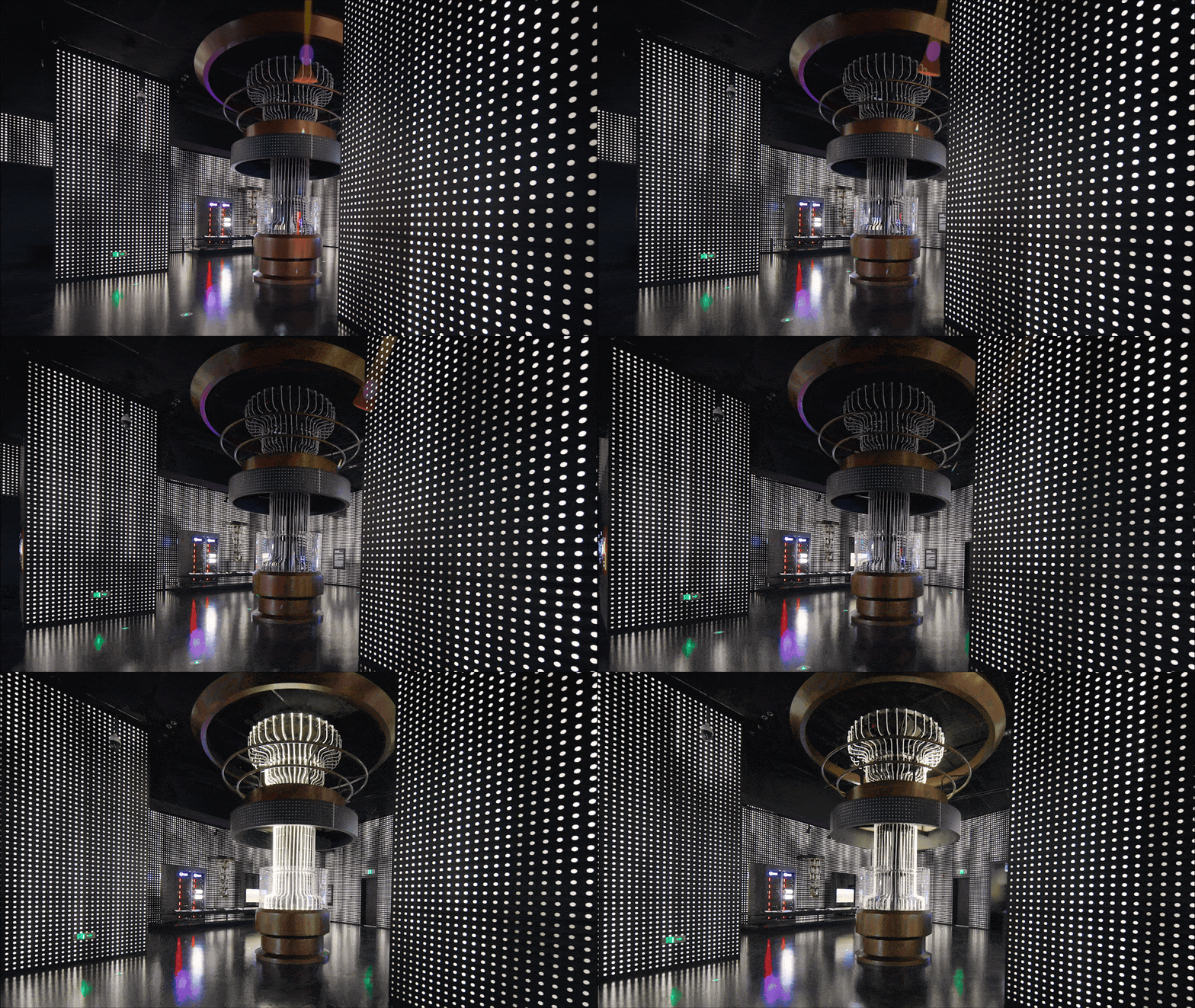
Particle-like light to evoke the fluid, dynamic nature of the Quantum Realm

Structure Diagram of Quantum Computer Model Installation ©VAVESTUDIO
Interactive exhibits on quantum computers, quantum communication, and quantum Go invite visitors to engage with unfamiliar concepts through familiar objects. At a turning point, Schrödinger's cat appears as a deconstructed, flickering white installation, a fitting nod to the uncertainty that lies at the heart of quantum mechanics.

Quantum Go

Schrödinger's Cat
Chapter 3: Exploring the Path of Genes
Where do we come from? What are we? These are among the oldest questions humanity has ever asked. And the answers lie within every cell.
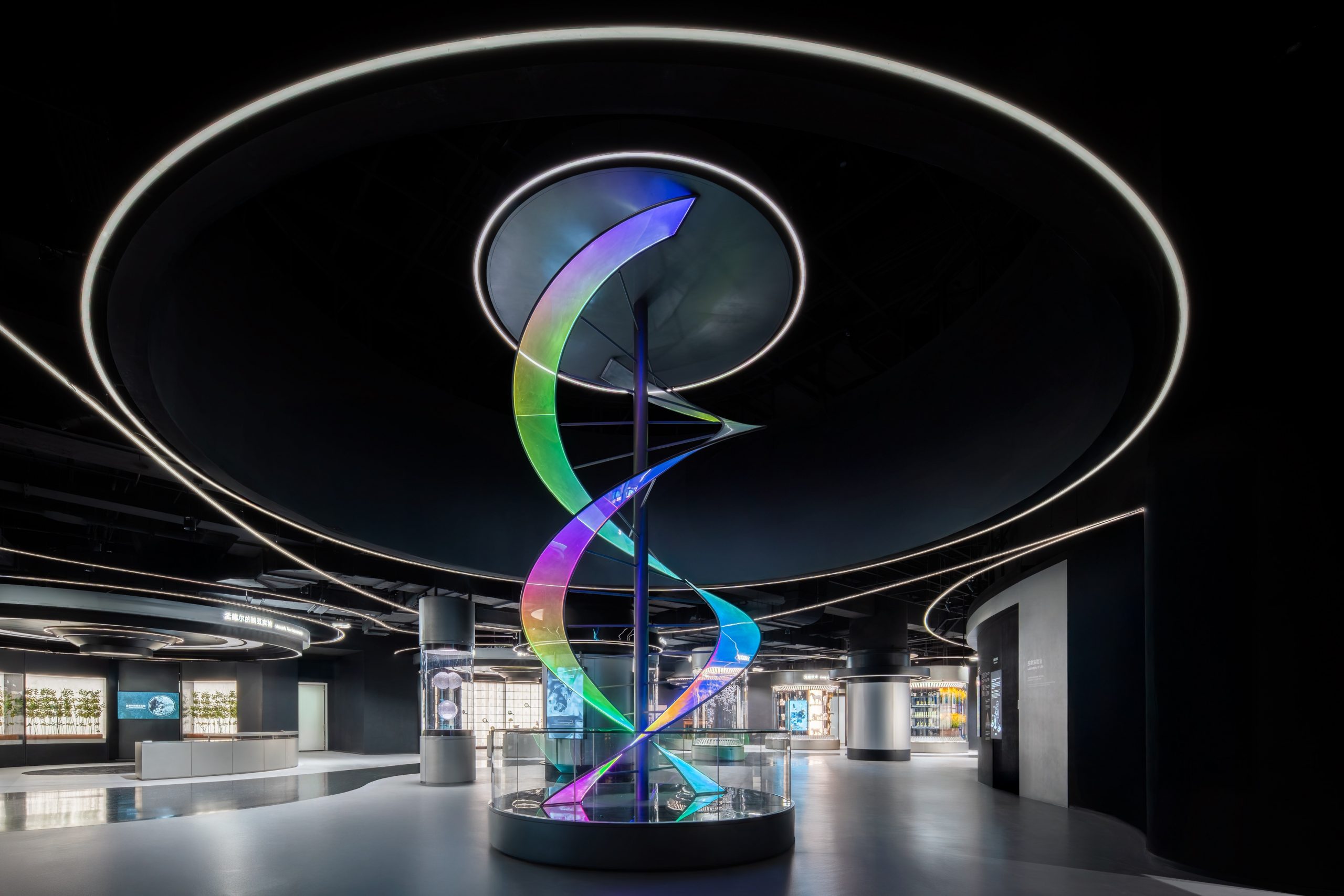
DNA Molecular Art Installation
In 1953, Watson and Crick unveiled the double helix structure of DNA, a discovery that revolutionized our understanding of reproduction, heredity, and the molecular basis of evolution.[3] "Exploring the Path of Genes" begins with a DNA molecular art installation, while time capsules scattered throughout the space mark key milestones in genetic research. These transparent capsules in varying scales serve as both physical and temporal containers, holding moments in history when someone expanded our understanding of what it means to be human.


Structural Diagram of Time Capsules at Different Scales ©VAVESTUDIO
Large-scale capsules combine artifacts with interactive experiences, inviting visitors to explore Mendel’s pea experiments, Zhu Xi’s toad experiments, and Dolly the sheep, the first cloned mammal. Medium-scale capsules display molecular structures such as Synthetic Insulin, using dramatic spatial presentation to magnify small-scale scientific wonders. The modular design also allows for future updates, just as science itself remains open to the unknown. The renovation also incorporates iconic pieces from the museum’s original collection, creating a dialogue between past and present.

Time Capsule-Morgan's experiment with Drosophila


Structure Diagram of Time Capsule-Dolly the Sheep ©VAVESTUDIO
Visitors can step into Mendel’s pea garden and experience artificial pollination through touchscreens, watching traits separate and recombine firsthand. Griffin’s Streptococcus pneumoniae experiment comes to life with hands-on games, allowing visitors to explore the process and principles behind it.
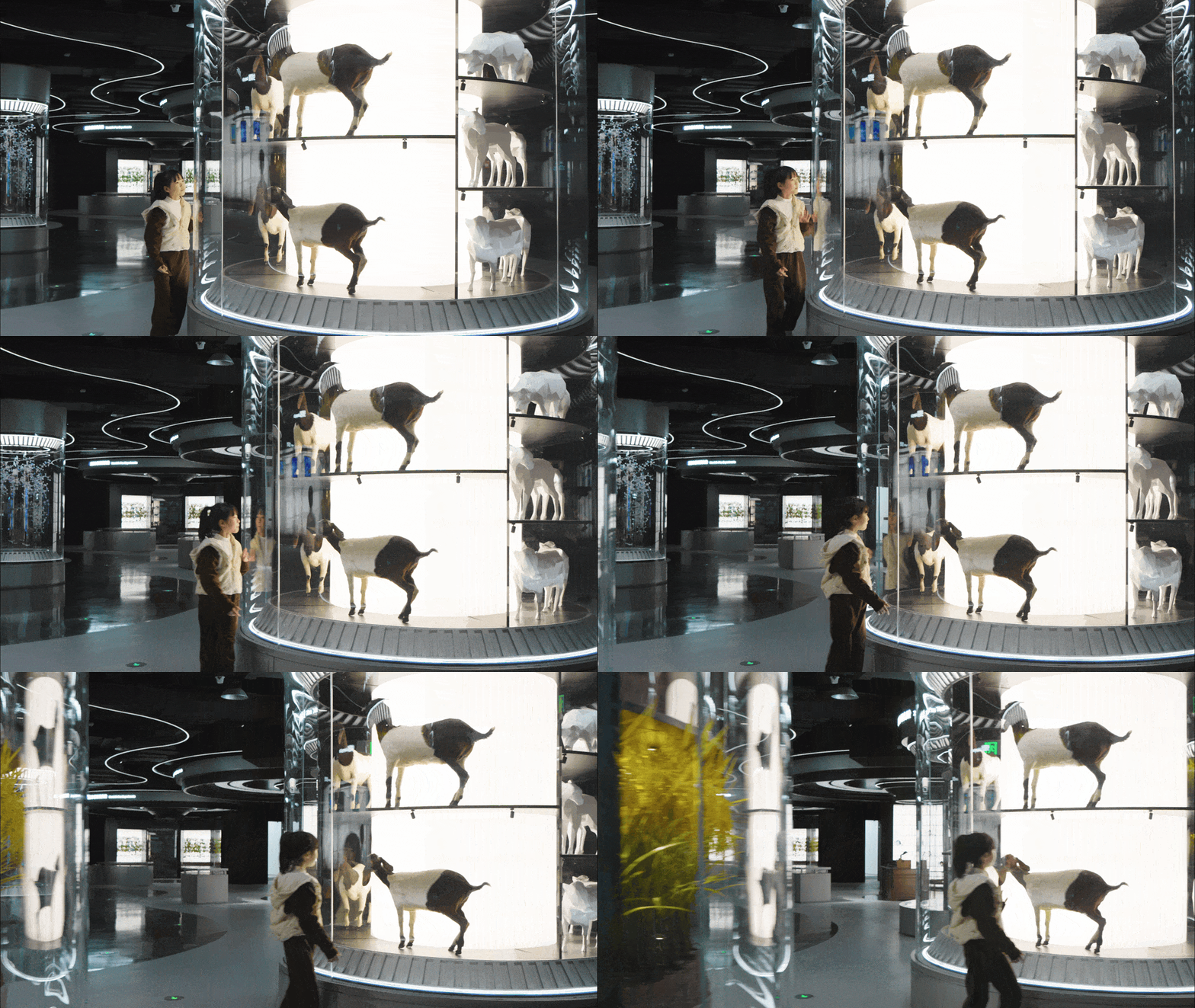
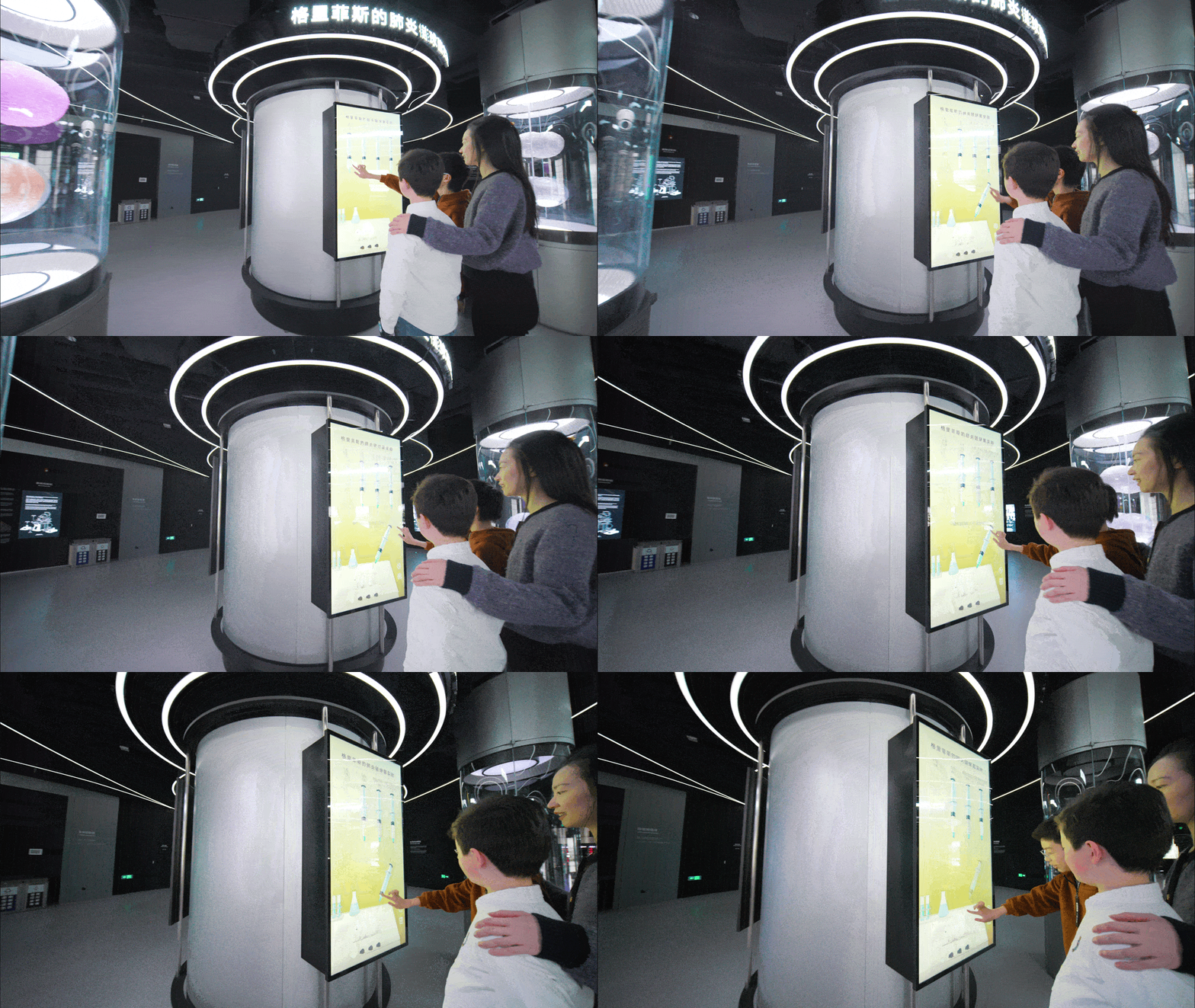
Through discovery and play, visitors engage with the very nature of science, becoming part of the narrative themselves. Science no longer feels distant; it becomes approachable, tangible, and human.
When you leave the gallery, you may still carry an unanswered question. That is the best gift this space has to offer.

References:
[1] Erminia Pedretti and Maria Navas Iannini, Controversy in Science Museums: Re-imagining Exhibition Spaces and Practice, Routledge, New York, Published 2020, Pp 48-63
[2] Wellington, J. J. (1998). Interactive Science Centres and Science Education. Croner’s Heads of Science Bulletin, 16. Surrey: Croner Publications Ltd.
[3] James E. McCleellan III and Harold Dorn, Science and Technology in World History An Introduction, the John Hopkins University Press, 2006, P381
Credits
Concept Design
VAVESTUDIO
Creative Director
Hu, Haijie
Project Manager
Cherry Wang
Content Planner
Junrong Zhang
Concept Design
Qi Xiang
Space Design
Jinlin Tang
Communication Design
Oly Wang
Schematic Design
Shanghai WINTOP DESIGN
Contractor & Construction
Shanghai Construction Group
Digital Content Production
Silkroad Visual Technology Co., Ltd.
Shanghai Chaolan Digital Technology Co., Ltd.
Shanghai Xisi Culture Communication Co., Ltd.
Photo- & Videographer
Yingchuan Culture


